
Understand that you’re part of a global community: approximately 39 million people worldwide are living with HIV today, and the landscape has transformed dramatically. Where HIV was once considered a terminal diagnosis, modern treatment has made it a manageable chronic condition, with people living full, healthy lives when they have access to care.
Recognize the progress being made globally. New HIV infections have declined by 39% since 2010, and AIDS-related deaths have fallen by 51% since their peak in 2004. These numbers reflect real advances in prevention, testing, and treatment access. Countries around the world have committed to ending HIV as a public health threat by 2030, and the scientific tools to achieve this goal exist today.
Know where Canada stands in this global picture. Canada has made significant strides, with approximately 63,000 people living with HIV as of recent estimates. The country’s universal healthcare system provides advantages in treatment access compared to many nations, though challenges remain in reaching certain communities and ensuring everyone knows their status.
Focus on what these statistics mean for your life specifically. Global progress demonstrates that effective treatment works, that stigma is decreasing, and that research continues advancing. Understanding these broader trends helps contextualize your own experience and shows that improved outcomes aren’t just possible—they’re happening worldwide. Whether you were recently diagnosed or have been living with HIV for years, you’re navigating this journey during an unprecedented time of medical advancement and growing social acceptance. The data tells a story of hope, resilience, and continuing progress toward a future where HIV no longer poses the threat it once did.
The Global HIV Landscape: Where We Stand Today
Understanding where we stand in the global response to HIV helps put our own experiences into perspective and shows us that we’re part of a worldwide community working toward the same goals.
As of the most recent data, approximately 40.8 million people globally are living with HIV. This number represents real individuals with families, dreams, and daily lives much like yours. While this figure might seem overwhelming at first, it’s important to know that significant progress has been made over the past two decades in supporting people living with HIV to lead healthy, fulfilling lives.
The global picture shows encouraging trends alongside ongoing challenges. In 2023, there were approximately 1.3 million new HIV infections worldwide, which represents a substantial decrease from previous years. This decline reflects the impact of improved prevention programs, expanded testing, and greater awareness. Similarly, AIDS-related deaths have decreased to around 630,000 annually, down significantly from peak years, thanks to better access to life-saving treatments.
| Region | People Living with HIV | New Infections (2023) | Treatment Access |
|---|---|---|---|
| Eastern & Southern Africa | 20.8 million | 470,000 | 79% |
| Western & Central Africa | 4.9 million | 230,000 | 58% |
| Asia & Pacific | 6.5 million | 240,000 | 77% |
| North America & Western Europe | 2.5 million | 78,000 | 87% |
These regional variations highlight an important reality: where you live significantly impacts your access to care and support. If you’re reading this in Canada, you’re in a region with strong treatment access, but this also reminds us of the ongoing need for advocacy and support for communities worldwide.
Globally, about 76% of people living with HIV now have access to antiretroviral treatment. This means millions of people are managing HIV as a chronic condition, working, raising families, and living well. These statistics aren’t just numbers; they represent hope, progress, and the collective effort of communities, healthcare providers, and researchers worldwide working to ensure everyone living with HIV can access the care they need.

HIV in Canada: A Different Reality
Who HIV Affects Most in Canada
In Canada, HIV does not affect all communities equally. Understanding who is most impacted helps us recognize where support, resources, and systemic changes are most needed.
Gay, bisexual, and other men who have sex with men continue to represent the largest proportion of new HIV diagnoses in Canada, accounting for approximately half of all new cases. This reflects not stigma or individual choices, but rather the combination of biological factors that make HIV transmission more likely during certain types of sexual contact, along with social challenges like discrimination and barriers to accessing prevention tools.
Indigenous peoples in Canada face a disproportionate burden among Indigenous populations, with rates significantly higher than the general population. This disparity is directly linked to the ongoing impacts of colonization, including intergenerational trauma, inadequate access to healthcare in remote communities, unsafe housing, and limited economic opportunities. These are not individual failings but the results of systemic inequities that require collective action to address.
People who inject drugs also experience elevated HIV rates. The criminalization of drug use creates barriers to harm reduction services like supervised consumption sites and clean needle programs, which are proven to save lives and prevent HIV transmission. When people face judgment rather than support, they are less likely to access the healthcare they need.
Other communities facing elevated risk include African, Caribbean, and Black Canadians, women facing gender-based violence, people experiencing homelessness, and sex workers. Each of these groups faces unique systemic barriers that increase vulnerability to HIV.
Understanding these patterns helps us advocate for policies that address root causes rather than blaming individuals. Everyone deserves access to prevention, testing, treatment, and compassionate care, regardless of their background or circumstances.

Treatment Access: Canada Versus the World
Canada stands as one of the world leaders in HIV treatment access, with approximately 87% of people diagnosed with HIV receiving antiretroviral therapy (ART). This places Canada well above the global average of around 76%, and significantly ahead of many regions where treatment remains difficult to access.
In high-income countries similar to Canada, treatment coverage typically ranges from 80-90%. However, stark differences emerge when comparing Canada to low and middle-income countries. In sub-Saharan Africa, which carries the highest HIV burden globally, treatment coverage has improved dramatically to about 77%, yet millions still lack access. In Eastern Europe and Central Asia, coverage drops to approximately 60%, while some regions face even greater challenges.
What makes Canada’s success particularly meaningful is the quality and consistency of care available. Most Canadians living with HIV who are on treatment can achieve an undetectable viral load, meaning the virus cannot be transmitted to sexual partners and their health outcomes are excellent. This is the foundation of what we call “U=U” or “undetectable equals untransmittable,” a scientifically proven fact that transforms lives.
However, it’s important to acknowledge that Canada’s strong overall statistics don’t tell everyone’s story. Significant gaps in treatment access persist for certain communities within Canada. Indigenous peoples, newcomers to Canada, people who use drugs, those experiencing homelessness, and individuals in remote or rural areas often face barriers to consistent care. These barriers might include stigma, lack of culturally appropriate services, distance from specialized clinics, or challenges navigating the healthcare system.
Additionally, while medication itself may be available, the cost of treatment can be a barrier for those without adequate drug coverage. Not all provinces and territories offer the same level of support, creating disparities across the country.
The good news is that awareness of these gaps is driving change. Community organizations, healthcare providers, and advocates are working to ensure that Canada’s excellent treatment statistics become a reality for every person living with HIV, regardless of their background or circumstances. Understanding where Canada excels globally while recognizing who still faces challenges helps us appreciate progress while staying committed to reaching everyone who needs support.
What These Numbers Really Mean for You
When you see global statistics showing millions of people living with HIV, it’s natural to wonder what these numbers mean for your own life and future. The good news is that behind these statistics lies a powerful story of progress, particularly here in Canada, where you have access to some of the world’s best HIV care and support systems.
The improved global statistics we’re seeing today reflect something truly important: better treatments are working. When reports show declining AIDS-related deaths worldwide, that’s evidence that antiretroviral therapy is more effective and accessible than ever before. In Canada, this translates into very real benefits for you. With consistent treatment and support from your healthcare team, you can achieve an undetectable viral load, which means the virus cannot be transmitted to others and your immune system can remain strong and healthy.
Canadian healthcare systems provide comprehensive support that makes these positive outcomes achievable. Provincial and territorial programs typically cover the cost of HIV medications, regular monitoring, and specialist care. This means you don’t face the financial barriers that affect people in many other countries. Your access to experienced healthcare providers, community support services, and the latest treatment advances puts you in an excellent position to manage your health effectively.
The statistics on life expectancy are particularly encouraging. Research shows that people diagnosed with HIV in Canada who start treatment early and maintain good adherence can now expect to live into their 70s and beyond, similar to the general population. This represents a dramatic shift from just a few decades ago and reflects the remarkable advances in HIV medicine.
These trends also mean improved quality of life, not just longer life. Modern HIV medications typically have fewer side effects, simpler dosing schedules (often just one pill daily), and work effectively to keep the virus suppressed. Many people living with HIV in Canada work, maintain relationships, have children, and pursue their goals without HIV limiting their possibilities.
Understanding these statistics helps put your own journey into perspective. You’re living with HIV at a time when science, medicine, and social support are stronger than ever before. The numbers tell a story of hope and progress that includes you.

Progress and Persistent Challenges
The global HIV landscape has transformed dramatically over the past two decades, offering genuine reasons for hope. New HIV infections have declined by more than 50% since their peak in the mid-1990s, and AIDS-related deaths have fallen significantly thanks to improved access to treatment. In Canada specifically, we’ve seen encouraging progress: new diagnoses have steadily decreased, and treatment outcomes have improved remarkably. Most people living with HIV in Canada who are on treatment achieve undetectable viral loads, which means they cannot sexually transmit the virus to others—a groundbreaking reality known as Undetectable equals Untransmittable, or U=U.
This scientific advancement represents more than statistics; it offers people living with HIV the opportunity to lead full, healthy lives and have intimate relationships without fear of transmission. Treatment has evolved to become simpler, with many individuals taking just one pill daily with minimal side effects. Canadians living with HIV now have life expectancies approaching those of the general population when diagnosed early and receiving consistent care.
However, challenges persist that require our ongoing attention and action. Stigma remains one of the most significant barriers, preventing many people from getting tested or accessing care. Despite decades of education, misconceptions about HIV transmission continue to affect employment, relationships, and mental wellbeing for those living with the virus. Testing gaps mean some Canadians remain unaware of their HIV status, missing crucial opportunities for early treatment.
Disparities also continue within specific communities. Indigenous peoples, gay and bisexual men, people who use drugs, and individuals from countries where HIV is endemic face disproportionately higher rates of new infections. These communities often encounter additional barriers to healthcare access, including discrimination, poverty, and inadequate culturally relevant services.
The path forward requires addressing these inequities while celebrating progress. By combining medical advances with compassionate, barrier-free care and continued efforts to eliminate stigma, we move closer to ending HIV transmission while supporting everyone affected by HIV to thrive.
Why These Statistics Matter Beyond Numbers
Behind every statistic on HIV is a person with hopes, dreams, relationships, and a unique story. When we read that 38 million people globally are living with HIV, or that Canada has seen significant improvements in treatment access, these numbers represent individuals navigating their health journey—perhaps someone like you, a loved one, or a member of your community.
Understanding these statistics matters because they help us see we’re not alone. The data shows that millions of people are living full, healthy lives with HIV, particularly in countries like Canada where treatment access has dramatically improved. These numbers counter outdated narratives and help reduce the stigma that too often surrounds HIV. When we know that people with HIV who maintain an undetectable viral load cannot transmit the virus sexually (U=U), statistics become powerful tools for changing attitudes and fostering acceptance.
Statistics also drive meaningful change. When decision-makers see data showing gaps in care or regional disparities, they can develop targeted programs and allocate resources where they’re needed most. In Canada, tracking testing rates, treatment access, and health outcomes helps ensure that services reach all communities equitably, including those who have historically faced barriers to care.
For those living with HIV, these numbers offer reassurance. Knowing that treatment success rates are high and life expectancy continues to improve provides genuine hope. The statistics confirm what healthcare providers see every day: HIV is a manageable chronic condition, and people living with HIV can expect to live long, fulfilling lives.
When we connect statistics to real experiences, they become less abstract and more personal. They remind us that progress is possible, that support systems exist, and that every person counted in these numbers deserves dignity, compassion, and access to quality care.
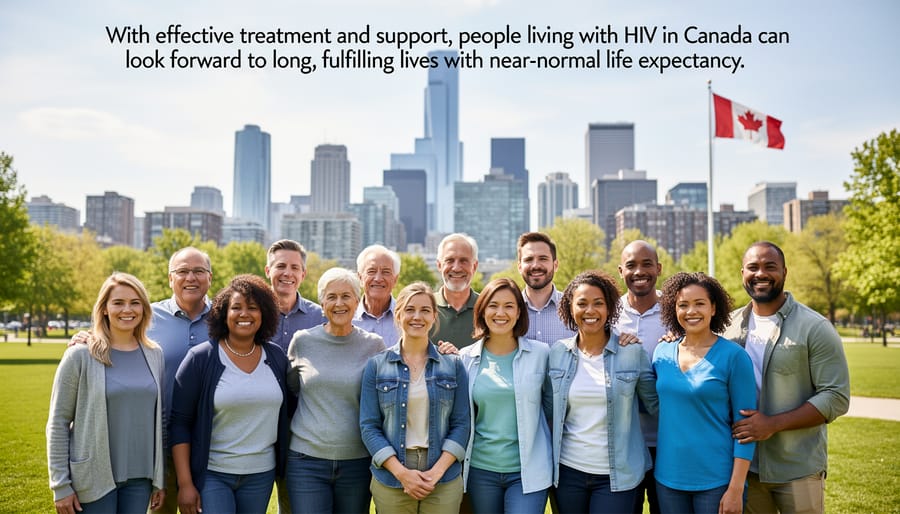
Understanding global HIV statistics helps us see the bigger picture, but what matters most is the reality of living with HIV right here in Canada. While the numbers we’ve explored provide important context about the worldwide pandemic, you have access to something many people around the world don’t: a robust healthcare system, comprehensive treatment programs, and extensive support networks designed specifically for your wellbeing.
Canada’s universal healthcare coverage means that HIV treatment is accessible regardless of your income. You have access to the latest antiretroviral medications, regular monitoring, and specialized care that keeps you healthy. The support systems available across provinces and territories are there to help you navigate every aspect of living with HIV, from medical care to emotional support.
Statistics tell us what’s happening on a broad scale, but your individual journey is what truly matters. Stay informed about your own health by working closely with your healthcare team, attending regular appointments, and keeping up with your treatment plan. Connect with local support groups and organizations where you can share experiences and find community with others who understand.
The future of HIV care continues to brighten with ongoing research, improved treatments, and growing public awareness that reduces stigma. Living with HIV today means you can pursue your dreams, maintain relationships, work, travel, and build the life you envision for yourself. With proper care and support, you can live a full, healthy, and meaningful life. You are not defined by your HIV status, and you are not alone on this journey.